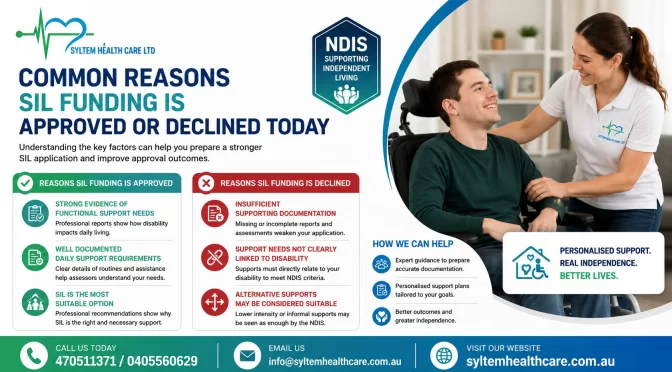
Applying for SIL funding can feel uncertain, as several factors influence whether an application is approved or declined. Understanding the process early can help you make more informed decisions and prepare with confidence. As a trusted NDIS provider, Syltem Health Care supports participants through every stage, offering personalised guidance and practical assistance to help navigate the SIL funding process with greater clarity.
What Does SIL Funding Cover?
SIL funding covers daily support services, not accommodation costs. It includes personal care, meal preparation, household tasks, medication assistance, and skill development, empowering participants to live more independently with tailored support from a supported independent living provider Tarneit.
Common Reasons SIL Funding Is Approved
Applications are more likely to succeed when they include detailed assessments, medical evidence, and clear explanations of daily support needs. Strong documentation showing why ongoing assistance is reasonable, necessary, and linked to disability gives the NDIS greater confidence when assessing SIL funding requests.
Strong Evidence Of Functional Support Needs
Functional assessments by occupational therapists and healthcare professionals show how disability impacts daily living. These reports justify ongoing support needs, helping the NDIS assess SIL funding eligibility to improve safety, independence, and long-term wellbeing with a supported independent living provider Point Cook.
Well Documented Daily Support Requirements
Clearly outlining daily routines and required assistance strengthens an application. When participants provide detailed information about personal care, cooking, medication, household responsibilities, and supervision needs, assessors gain a better understanding of why consistent support is essential.
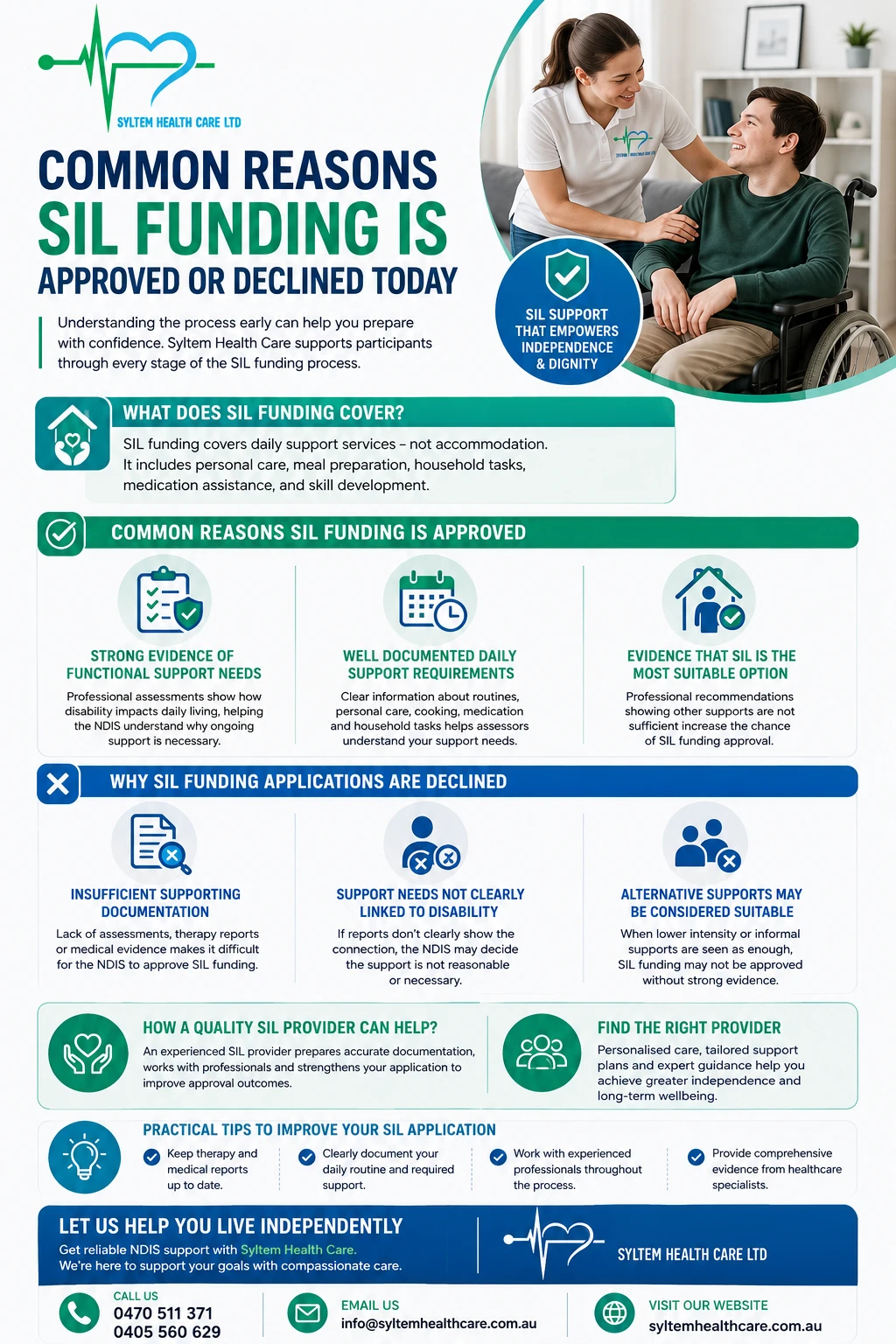
Image Source: au.pinterest.com
Evidence That SIL Is The Most Suitable Option
The NDIS considers whether Supported Independent Living is the most appropriate support option. Applications supported by professional recommendations showing alternative supports are insufficient are more likely to receive SIL funding because they clearly demonstrate genuine and ongoing support requirements.
Why SIL Funding Applications Are Declined
Many SIL applications are declined due to incomplete evidence or unclear documentation of intensive support needs. Understanding these common issues helps participants strengthen future applications, provide accurate supporting reports, and improve approval outcomes with guidance from Syltem Health Care.
Insufficient Supporting Documentation
Applications without comprehensive therapy reports, functional assessments, or detailed medical evidence often struggle during assessment. The NDIS needs clear documentation explaining how disability affects everyday activities before approving SIL funding for ongoing independent living support.
Support Needs Are Not Clearly Linked To Disability
Every requested support must directly relate to the participant’s disability. If reports fail to explain this connection, the NDIS may decide the requested assistance does not meet funding requirements, leading to delays or declined applications despite genuine support needs.
Alternative Supports May Be Considered Suitable
Sometimes the NDIS determines that lower intensity services or informal supports can adequately meet a participant’s needs. When alternative options appear suitable, SIL funding may not be approved unless strong evidence demonstrates why higher levels of support remain necessary.
How A Quality SIL Provider Can Help?
An experienced SIL provider collaborates with participants, therapists, and support coordinators to prepare accurate documentation. Their expertise ensures assessments reflect genuine daily support needs, strengthens funding applications, and helps participants make informed decisions throughout the process with Syltem Health Care.
Finding The Right Supported Independent Living Provider Melton
Choosing an experienced provider ensures personalised care and better long term outcomes. A trusted team listens to your goals, develops tailored support plans, and helps you navigate the NDIS process while encouraging greater independence, confidence, and community participation.
Practical Tips To Improve Your SIL Application
Keep therapy reports updated, clearly document your daily support needs, and work with experienced professionals throughout the application process. Comprehensive evidence from healthcare specialists strengthens your SIL application and improves funding success with a supported independent living provider Werribee.
Concluding Note
Securing SIL funding begins with understanding NDIS requirements and providing strong evidence of your support needs. A well-prepared application can reduce delays, improve approval chances, and help you achieve greater independence with trusted guidance from Syltem Health Care.
Get Reliable Support With Us
Looking for trusted NDIS support? Syltem Health Care provides personalised guidance with SIL funding, accommodation options, and daily support tailored to your goals. Choose us for compassionate care that supports your independence and wellbeing. Call us at 0405 560 629 / 0470 511 371 or email info@syltemhealthcare.com.au
Frequently Asked Questions
How Long Does SIL Funding Take To Be Approved?
The approval timeframe depends on the complexity of your application and whether the NDIS requests additional information. Providing complete assessments and supporting documents from the beginning can help avoid unnecessary delays.
Can I Receive SIL Funding Alongside Other NDIS Supports?
Yes. Many participants receive SIL funding together with other NDIS supports, including therapies, support coordination, community participation, and capacity-building supports, as long as each support is considered reasonable and necessary.
Do I Need An Occupational Therapy Assessment For SIL?
Although it is not always compulsory, a functional capacity assessment completed by an occupational therapist is one of the most valuable documents for demonstrating your daily support needs.
Can I Choose Who I Live With In SIL Accommodation?
In many cases, you can. Providers usually consider personalities, lifestyles, interests, and support needs when matching housemates to help create a comfortable and supportive living environment.
Is SIL Funding Available For People Who Want To Live Alone?
Yes. If your support needs require individual assistance and shared living is not suitable, the NDIS may approve funding for a single occupancy arrangement based on your circumstances.
What Happens If My SIL Funding Application Is Declined?
If declined, request a review, provide updated evidence or assessments through a supported independent living provider Altona to strengthen eligibility.
Can My SIL Funding Change In The Future?
Yes. Your funding may change after an NDIS plan review if your goals, health, or daily support requirements increase or decrease over time.
Does SIL Funding Cover Rent And Household Bills?
No. SIL funding pays for support services rather than accommodation costs. Participants are generally responsible for rent, utilities, groceries, and other personal living expenses.
Can A Family Member Be Paid To Provide SIL Supports?
In most situations, the NDIS prefers support workers who are independent of the participant. Family members are only funded in exceptional circumstances where it is considered appropriate.
What Is The Difference Between SIL And Specialist Disability Accommodation?
Supported Independent Living funds the support you receive each day, while Specialist Disability Accommodation helps fund specially designed housing for participants with significant physical or functional needs.
Can I Change My SIL Provider If I Am Unhappy?
Yes. If your current provider is no longer meeting your needs, you can change providers according to your service agreement and choose one that better aligns with your goals.
Who Decides How Much SIL Support I Receive?
The NDIS determines your level of support by reviewing professional reports, daily living requirements, personal goals, and recommendations from your healthcare and support team.
Is There A Minimum Age Requirement For SIL?
Participants must meet NDIS eligibility requirements. SIL is generally intended for adults, although each application is assessed individually based on support needs and personal circumstances.
Can I Visit A SIL Home Before Moving In?
Absolutely. Most providers encourage prospective participants to visit the home, meet the team, and explore the environment before making a final decision.
How Can I Improve My Chances Of Receiving SIL Funding?
Keep your reports current, provide detailed evidence of your daily challenges, and work closely with experienced professionals who can clearly demonstrate why ongoing support is essential for your independence.

 14 Crichton Rd, Thornhill Park VIC 3335, Australia
 24/7
24/7